Home About Us Brainstorm Research Events Membership Contact Donate →

The future of neuroscience
is here.

The Mind Science Foundation was created in 1958 to understand the vast potential of the human mind and solve the puzzle of consciousness. Today, we carry out that mission by funding pioneering research led by early-career scientists, and sharing the discoveries through public events.

Learn More

Our mission: understanding the mind.

Since 1958, the Mind Science Foundation has pursued one of science’s biggest open questions — the nature of human consciousness. We carry out that mission today by funding rigorous neuroscience research and building educational programs that bring the science to a wider audience.

The BrainStorm competition

Each year the Foundation awards BrainStorm grants to early-career researchers tackling the most fundamental questions about the mind.
29Scientists funded
$640KIn research funding
15+Countries represented
Learn More
Watch the 2025 BrainStorm recap

Events

Past Event

October 2025 · San Antonio

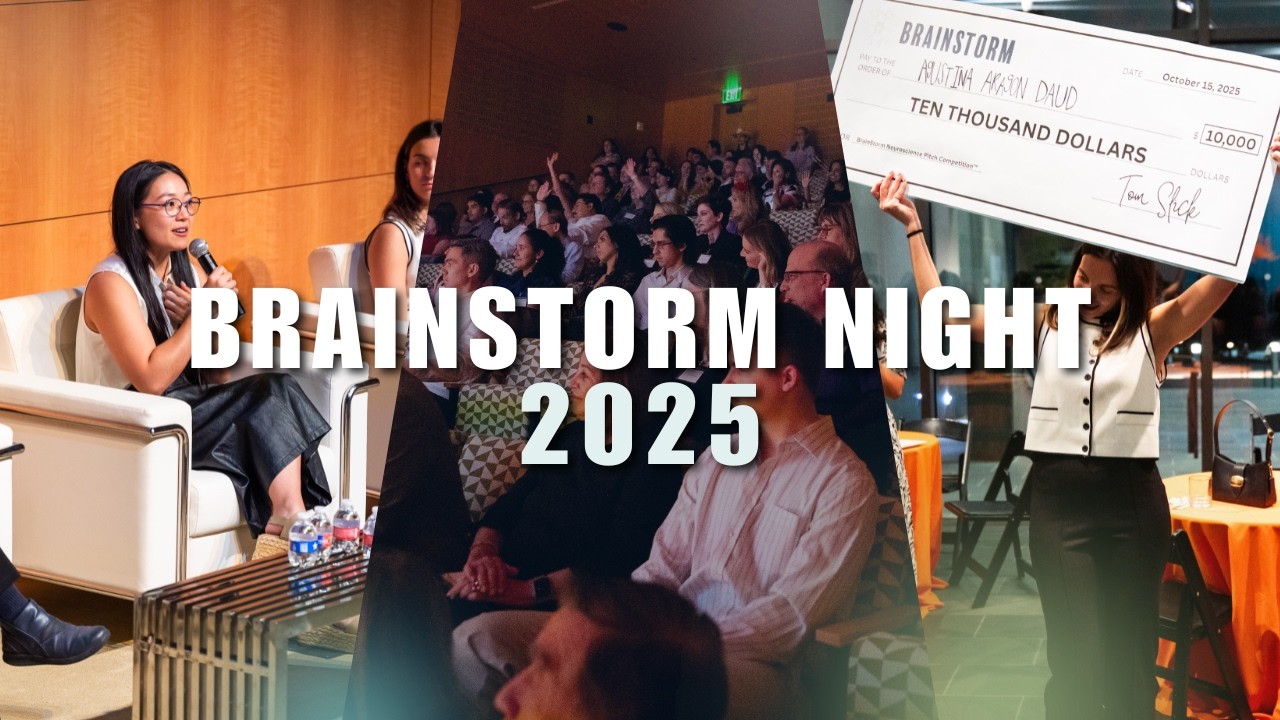
BrainStorm Night 2025

An evening celebrating that year's BrainStorm pitch competition, held at the McNay.

Past Event

July 2026 · San Antonio

Think Mind Science — Pop Culture Cognition

Jazlyn Nketia, PhD used familiar pop culture examples to demonstrate how cognitive science can anticipate behavior, power dynamics, and decision-making.

Join the Explorer’s Circle

Join a community of people who believe the mind is the last great frontier, and help fund the science that explores it.

BrainStorm tickets

Tickets to the BrainStorm Pitch Competition, our flagship event of the year.

Speaker Series

Tickets to Speaker Series events featuring leading scientists.

Exclusive gatherings

Cocktail hours and salons with the scientists we fund.

The Explorer’s Digest

A curated newsletter with event calendars, science-backed articles, and community updates.

Explore membership

Built on a legacy of bold inquiry.

Founded by Tom Slick to pursue the science of the mind long before it was fashionable. Six decades of funding the questions others wouldn't.

1958

A foundation for the mind

Tom Slick establishes the Foundation to support rigorous, unconventional research into consciousness and the brain.

1960s–1980s

Expanding the research

The Foundation broadens its funding across emerging fields of neuroscience and mind science.

1990s – 2000s

Community and education

Public programming and gatherings bring the science of the mind to a wider audience.

2018–today

The BrainStorm era

The annual BrainStorm grants channel funding directly to the next generation of researchers.

Exploring the mind, scientifically.

The mission of the Mind Science Foundation is to explore the vast potential of the human mind in a scientific manner, for the betterment of humankind. Current areas of focus include supporting the search for an answer to one of the major questions of modern science — the puzzle of human consciousness. We do this by funding innovative research and accessible educational programs focused on the mind, brain, and human consciousness, all with the goal of improving the human condition.

We are a 501(c)(3) private operating foundation supported by a special endowment from our founder, visionary philanthropist and entrepreneur, Thomas Baker Slick, Jr. But to fully realize our strategic goals of sponsoring research at meaningful levels of funding, and providing educational opportunities to translate that research for the public, we rely on tax-deductible contributions from individuals, corporations, and granting foundations. For more information on how you can support our work, visit our membership page.

The people behind the mission

Leadership

Marissa RodriguezPresident & CEOmrodriguez@mindscience.org

Marissa Rodriguez has built her career at the intersection of philanthropy, education, and institutional leadership. She earned a Bachelor of Arts from the School of Journalism and Communication at the University of Oregon, followed by a Master of Business Administration from St. Mary's University in San Antonio, graduating summa cum laude.

Over more than a decade, Marissa has led multimillion-dollar fundraising initiatives, guided foundations and nonprofits through periods of strategic growth, and cultivated partnerships that connect mission-driven organizations with corporate and philanthropic leaders.

As Chief Executive Officer of the Mind Science Foundation, Marissa is dedicated to positioning the foundation as a hub for innovative scientific research and cross-disciplinary collaboration, and to fostering connections that advance the science of mind and expand the frontiers of human understanding.

Ben Rein, PhDChief Science Officerbrein@mindscience.org

Ben Rein, PhD is an award-winning, Stanford-trained neuroscientist and renowned science communicator. He has published over 20 peer-reviewed studies examining the neuroscience of social interactions, and he also educates an audience of more than 1 million social media followers.

He has been featured on Entertainment Tonight, Good Morning America, and other major media outlets, and he has received awards from the National Academies of Science Engineering and Medicine, the Society for Neuroscience, and the American Association for the Advancement of Science.

Ben won the BrainStorm Competition in 2021, leading a project focused on the effects of social isolation as a postdoc at Stanford. In 2023, Ben stepped in as Chief Science Officer, to support and oversee the BrainStorm process, and provide science communication coaching to our finalists.

Officers

Founder and Managing Director of Alliance Psychology.

Joshua Essery, PsyD, ABPPChair

Physician and founder of People-Centered Health.

Rick Ramos Dominguez, MDImmediate Past Chair

Co-founder of Active Capital, a San Antonio venture firm backing technical founders who are rebuilding software and infrastructure for an AI-native world.

Cat DizonVice Chair

Randi Brosterman Hutchens is an Executive Coach to C-suite, senior leaders, and board directors focusing on leadership development; her firm is Actionable Transitions LLC (actionabletransitions.com). Previously, Randi was a Strategy and Operations Principal (equity owner / partner) with Deloitte Consulting. Randi holds an MBA in Finance/Marketing from the Wharton School, University of Pennsylvania.

Randi Brosterman HutchensTreasurer

Vice President of Research and Development at Southwest Research Institute.

James R. Keys Jr.Secretary

Board of trustees

KP
Kimberley Phillips, PhDTrinity University

Professor in the Department of Psychology and Neuroscience at Trinity University.

SS
Sudha Seshadri, MDUT Health San Antonio

Director of the Glenn Biggs Institute for Alzheimer’s and Neurodegenerative Diseases at UT Health San Antonio.

BB
Brian Beem, Jr.AMCI Capital

Managing Director at AMCI Capital.

MD
Mannik S. DhillonVictory Capital

President of Investment Franchises & Solutions. Head of ETF's for Victory Capital.

GG
Gisela GirardCreative Civilization

Co-Founder and President of Creative Civilization.

CG
Cristal GlangchaiVenture Lab

Founder and CEO of Venture Lab.

JK
Jeff KerrCaseFleet

CEO and Founder of CaseFleet.

TK
Travis KowalskiRK Group

Chief Administrative Officer at RK Group.

GP
George PedrazaBank of Texas

Senior Vice President and Market Executive at Bank of Texas.

EP
Ehren PowellMarathon Petroleum

Chief Digital Officer and Senior Vice President at Marathon Petroleum.

MW
Matt Wanat, PhDUT San Antonio

Faculty member in the Department of Neuroscience at the University of Texas at San Antonio.

Lifetime trustee

Tom Slick, Jr.In Memoriam

Emeritus trustees

PBPatty Slick Beem MCMary & Bob Cocke, PhD CCCatherine Nixon Cooke PDPatricia Diaz Dennis RGRichardson Gill, PhD PIPaul Ingmundson, PhD JKJohn C. Kerr AKAlan C. Kramer CLCappy Lawton JMJ.G. “Sandy” McNab JNJohn “Chico” Newman EREmilio F. Romero, MD RRRuth Bowman Russell PSPeter C. Selig PSPatricia Smothers TSTom Stone, PhD AVAlice B. Viroslav, MD

It started with Tom Slick.

1916 – 1962

Tom Slick, Jr.

Visionary philanthropist and entrepreneur Tom Slick founded the Mind Science Foundation in 1958. Shortly before his untimely death in a plane crash only four years later, he wrote:

“I regard the creation of the Mind Science Foundation as the most important undertaking of my life and I plan to devote most of my time to it. I feel that the human mind has tremendous unexplored potential and I want to go about the discovery of that potential in a scientific way.”

During his action-packed life, Tom Slick parlayed the wealth and robust work ethic inherited from his father, known as the “King of the Wildcatters,” and, joined with his native genius, helped build Slick Oil Company into a multi-million dollar company in the early 1960s. Tom was possessed of a prescient vision of the “power of the possible,” founding Texas Biomedical Research Institute in 1941, followed by Southwest Research Institute a few years later.

An intrepid explorer, Tom sponsored two expeditions to Nepal in the late 1950s, hoping to find the Yeti in order to scientifically determine whether it was a legitimate ‘missing link’ between Homo sapiens and earlier primates.

While he didn't find the Yeti, Tom returned from his expeditions in Nepal with a profound desire to explore the unknown mysteries of the mind, inspired by the powers of the mind he observed in the yogis and holy men he encountered. That desire inspired his creation of the Mind Science Foundation.

Your support funds the boldest ideas in neuroscience.

Every gift goes directly toward early-career research and the programs that bring neuroscience to the world. Give once, or become a member of the community that makes it possible.

Choose how to support

Funding the science of the mind.

The Mind Science Foundation has spent over six decades funding researchers who ask the hardest questions about the brain, consciousness, and what it means to be human. These aren't questions with obvious commercial value — they're the ones that matter most.

Your support funds that work directly — and through our education programs, you help bring the answers back to the world.

BrainStorm grant recipients

Explore Our Membership Options

Explorer

$50/year

Membership Includes

  • "The Explorer's Digest" (Digital) — Stay connected through a curated newsletter that includes an event calendar, science-backed articles reviewed by Dr. Ben Rein, community highlights, member stories, and exclusive updates from Mind Science.
  • Exclusive Mind Science Member Brain Pin
Join Explorer

Investigator

$250/year

Membership Includes

  • "The Explorer's Digest" — printed copy mailed directly + digital version
  • 2 Tickets to one Mind Science event per year
  • Exclusive Mind Science Member Brain Pin
Join Investigator

Innovator

$500/year

Membership Includes

  • 2 Tickets to BrainStorm Pitch Competition
  • 2 Tickets to each Speaker Series Event
  • "The Explorer's Digest" a Printed Quarterly Mailing + Digital
  • Exclusive Mind Science Member Brain Pin
Join Innovator

Visionary

$1000/year

Membership Includes

  • Exclusive Access to BrainStorm Pitch Video Watch Party
  • 2 Reserved Seats to Private Cocktail Hour with BrainStorm Winners
  • 2 Tickets to BrainStorm Pitch Competition
  • 2 Tickets to each Speaker Series Event
  • "The Explorer's Digest" a Printed Quarterly Mailing + Digital
  • Exclusive Mind Science Member Brain Pin
  • Official Recognition on MSF Website (Optional)
Join Visionary

Where curiosity gathers.

Lectures, salons, and showcases that bring the science of the mind to life. Open to members and guests, come curious.

See what's coming up

Next up

Thu 12 Nov · 6:00 – 9:00 PM · San Antonio Museum of Art

BrainStorm: Neuroscience Pitch Competition — An Evening of Science and Art

Join us in awarding $100,000 in research funding to three exceptional neuroscientists. The evening includes cocktails and hors d'oeuvres, plus access to The Etruscans: From the Heart of Ancient Italy exhibit. Tickets are $75 ($35 for students).

For event information, contact Rose Martinez at rmartinez@mindscience.org.

More info

Past events

Think Mind Science

July 2026 · San Antonio

Think Mind Science — Pop Culture Cognition: Understanding People, Power, and Your Own Mind

Mind Science partnered with TPR for this Think Mind Science event. Jazlyn Nketia, PhD, used familiar pop culture examples to demonstrate how cognitive science can be used to anticipate behavior, power dynamics, and decision-making well before outcomes are apparent.

With Jazlyn Nketia, PhD

Think Mind Science

April 2026

A Gut Feeling: How the Gut-Brain Axis Influences Sleep

With Dr. Devjoy Dev & Ben Rein, PhD

BRAINSTORM

October 2025 · San Antonio

BrainStorm Night 2025

An evening celebrating this year's BrainStorm pitch competition, held at the McNay.

Mini-Brains to Human Minds

October 2024 · Virtual

From Mini-Brains to Human Minds

Neurodevelopmental conditions like autism affect millions of children, and current treatments are often not very effective.

With Dr. Christian Cazáres

Adapt Reclaim Thrive

May 2024

Adapt, Reclaim, and Thrive

Chronic stress not only diminishes our quality of life, but also induces inflammation in the brain and body.

With Dr. Breeanne Soteros

Rethinking Psychedelics

April 2024 · Virtual

Rethinking Psychedelics

A conversation with Lindsay Cameron, PhD, on her Mind Science-funded psychedelics research at Stanford's Malenka and Deisseroth Labs.

With Dr. Lindsay Cameron

Dreams on Demand

November 2023 · Virtual

Dreams on Demand

Dreaming is emblematic of our sleeping experiences. Yet, the functions of dreaming remain elusive, in part due to the difficulty of controlling dreams experimentally.

With Karen Konkoly

A Trip Back to Life

October 2023 · Virtual

A Trip Back to Life

Post-comatose disorders of consciousness are among the most challenging neurological conditions modern medicine faces.

With Paolo Cardone

Improving Lives Today

April 2023

Improving Lives Today

A discussion with UT San Antonio researchers Dr. Leslie Neely and Dr. John Quarles on using VR, AR, and AI to improve lives for people with disabilities.

With Dr. Leslie Neely & Dr. John Quarles

Don't miss what's next.

New events are added throughout the year. Join as a member for early access, or sign up below to stay in the loop.

Explore membership →

This is BrainStorm.

The BrainStorm Neuroscience Pitch Competition™ funds early-career researchers to run pilot studies and translate their science for the world through a pitch video. Finalists are guaranteed $30,000, plus a chance at a $10,000 Audience Choice Award.

Apply now
BrainStorm Night 2025

Big ideas, told simply.

The BrainStorm Neuroscience Pitch Competition™ funds early-career researchers teamed with senior investigators. The awards are intended to fund pilot studies to help them obtain grants for further research, with an additional goal of encouraging the development of science communication skills.

Open to researchers internationally, at any institution, working on the questions that matter most about the mind.

$30KGuaranteed to every finalist
$10KAudience Choice award
$500K+Distributed since 2018

Past year's winners

2025 · Winner

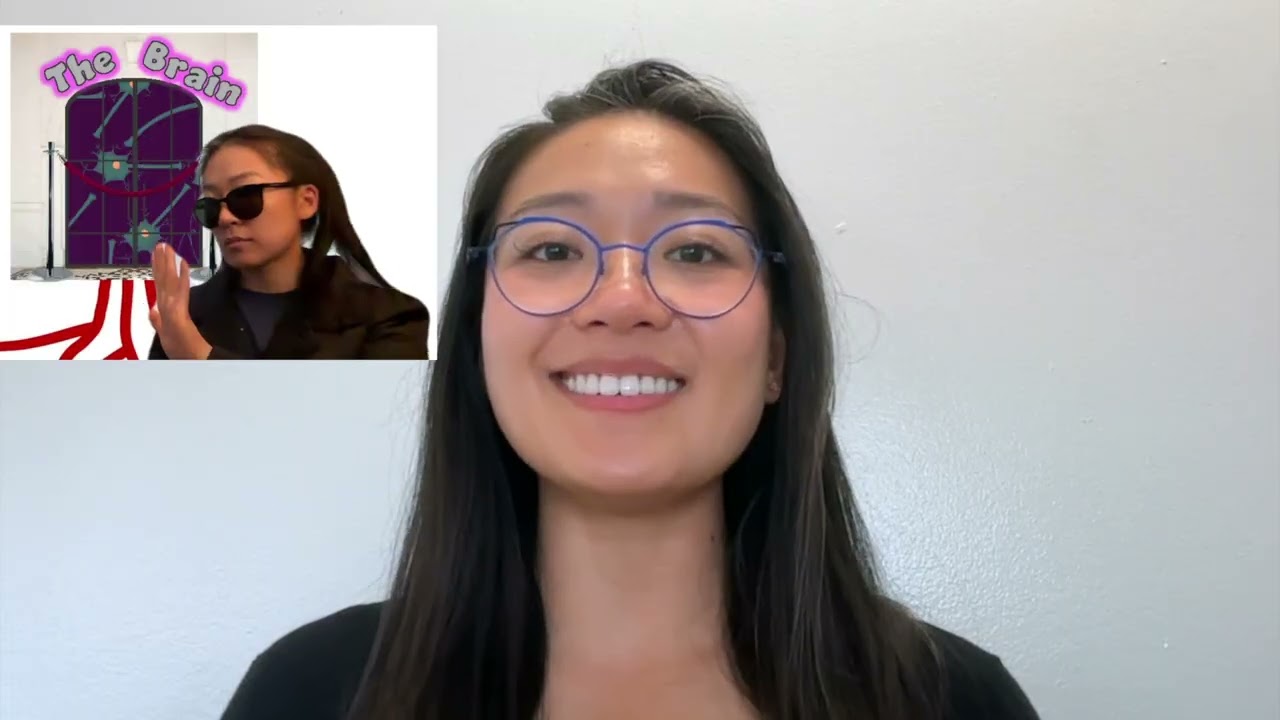
Agustína Aragón Daud

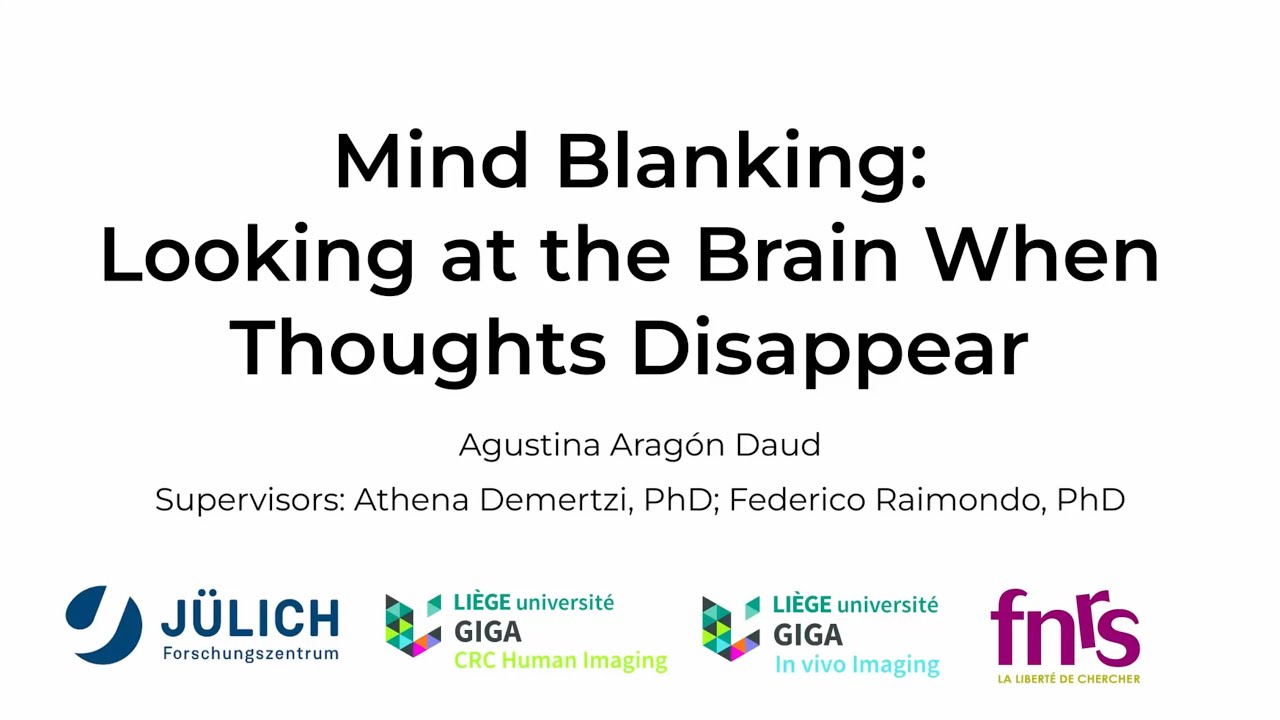
“Mind Blanking: Looking at the Brain When Thoughts Disappear”

Audience Choice

2025 · Winner

Iris Garcia-Pak

“Bursting with Excitement: Blood-Brain-Barrier-Controlled Brain Excitability and Alzheimer's Disease”

2025 · Winner

Eti Ben-Simon

“Too Tired to Think Straight: The Role of Sleep Loss in Spreading Misinformation”

2026 cycle closed · reopens February 2027

Apply for the next cycle.

Applications for our 2026 cycle are now closed. We'll begin accepting applications for the next cycle in February 2027 — check back then, or download the RFP below to start preparing. We fund original research that advances the science of consciousness or improves the health and well-being of humankind. Early-career neuroscientists are especially encouraged to apply.

Consciousness Sleep & Dreaming Neurodevelopment Dementia & Parkinson's Psychedelics Artificial Intelligence Creativity & Cognition Cognitive & Translational Neuroscience
Applications closed Download the RFP ↓

What you'll need

A research proposal

Your project in the science of consciousness, per the RFP guidelines.

A senior-PI partner

Early-career applicants partner with a senior primary investigator.

A pitch-ready idea

Finalists translate their work into a short public video.

Questions? Reach Ben Rein, Chief Science Officer, at brein@mindscience.org.

Research we’ve made possible.

From landmark studies on consciousness to pilot studies funded through BrainStorm, here is some of the published research the Mind Science Foundation has helped make possible since 1958.

Since 2018

Funded through BrainStorm

Since 2018, the BrainStorm Neuroscience Pitch Competition has funded early-career scientists to run pilot studies in the science of the mind. Here is some of the research that funding helped produce.

Ludwig, Wey, Sudad, et al. · Preprint, 2026

In-Person Contemplative Dyad Meditation to Increase Mindfulness, Connection, and Well-Being in Young Adults

Tests whether a structured, in-person meditation practice done in pairs boosts mindfulness, social connection, and well-being in young adults — early evidence that practicing mindfulness together may amplify its benefits.

Read the paper →

Mason, Czeszumski, Totomanova, et al. · bioRxiv, 2026

Tuning in Together: LSD Enhances Inter-Brain Synchrony and Felt Connectedness in Romantic Couples

In a placebo-controlled study of 25 couples who took LSD together, partners reported feeling closer, more trusting, and more “in sync” — and their brain activity backed it up, showing measurably stronger brain-to-brain synchrony during shared rest.

Read the paper →

Konkoly, Morris, Hurka, et al. · Neuroscience of Consciousness, 2026

Creative Problem-Solving After Experimentally Provoking Dreams of Unsolved Puzzles

Frequent lucid dreamers were cued with sound to dream about puzzles they’d failed to solve while awake — a step toward directly testing whether dreaming helps solve problems.

Read the paper →

Lundsgaard, Nørkær, Mamat, et al. · Preprint, 2025

Suppressing Emotional Memories in Adolescents: Evidence from an Autobiographical Think/No-Think Task

Teenagers, like adults, can deliberately push down the recall of upsetting personal memories — a finding with promise for low-cost tools that help young people manage intrusive memories and regulate emotion.

Read the paper →

Hopkins, Lan & Schurger · iScience, 2025

Self-Initiated Action Rescues Visual Targets from Backwards Masking

A fast-following visual mask can normally make an image invisible, but this study found that triggering the image yourself, rather than having it appear automatically, makes you more likely to actually see it.

Read the paper →

Konkoly, Morris, Cho, et al. · Neuropsychologia, 2025

Investigating Dreams by Strategically Presenting Sounds During REM Sleep

Playing a sound associated with a specific waking task during REM sleep made people more likely to dream about that task — and dreaming about it was linked to more creative, less negative dreams.

Read the paper →

Rein, Raymond, Boustani, et al. · Science Advances, 2024

MDMA Enhances Empathy-Like Behaviors in Mice via 5-HT Release in the Nucleus Accumbens

MDMA increases empathy-like behavior in mice by releasing serotonin in a specific brain region, and the same mechanism restores empathy deficits in a mouse model of autism — a clue to MDMA’s reputation as an “empathogen.”

Read the paper →

Ciccione, Sablé-Meyer, et al. · Scientific Reports, 2023

Trend Judgment as a Perceptual Building Block of Graphicacy and Mathematics, Across Age, Education, and Culture

Tested nearly 4,000 people, from unschooled villagers in Namibia to first-graders, and found a basic ability to read a graph’s trend that sharpens with education — suggesting graph-reading taps a deep, partly innate perceptual skill.

Read the paper →

Ciccione, Dehaene & Dehaene · J. Exp. Psych: HPP, 2022

Outlier Detection and Rejection in Scatterplots

Outlier data points quietly skew people’s intuitive read of a trend — even when they’re explicitly told to ignore them.

Read the paper →

Ciccione, Sablé-Meyer & Dehaene · Cognition, 2022

Analyzing the Misperception of Exponential Growth in Graphs

People reliably underestimate how fast exponential trends, like disease spread, grow when reading a noisy graph — a bias that shrinks with math knowledge and with switching to a logarithmic scale.

Read the paper →

Lefner, Magnon, Gutierrez, et al. · J. Neuroscience, 2021

Delays to Reward Delivery Enhance the Preference for an Initially Less Desirable Option

In rats, making a reward wait longer can flip which option they prefer — and this study pins down two brain regions required for that reversal, the basolateral amygdala and retrosplenial cortex.

Read the paper →

Ciccione & Dehaene · Cognitive Psychology, 2021

Can Humans Perform Mental Regression on a Graph? Accuracy and Bias in the Perception of Scatterplots

People can size up a scatterplot’s trend almost instantly, in as little as 100 milliseconds, but consistently overestimate how steep that trend is.

Read the paper →

Konkoly, Appel, Chabani, et al. · Current Biology, 2021

Real-Time Dialogue Between Experimenters and Dreamers During REM Sleep

A landmark demonstration that people in the middle of a lucid dream can perceive questions from the outside world and answer in real time with eye movements or facial signals — two-way communication during sleep.

Read the paper →
Since 1958

Funded by the Foundation

Decades before BrainStorm began, the Mind Science Foundation funded research into consciousness, sleep, memory, and the brain.

Berman, Cushing, Manuel, et al. · Phil. Trans. R. Soc. B, 2024

Modulating Subjective Pain Perception with Decoded Neurofeedback

A proof-of-concept study using real-time brain-imaging feedback to let people see and adjust the brain patterns behind their own pain — a step toward neurofeedback-based pain treatment.

Read the paper →

Wang, et al. · Annals of Physical and Rehabilitation Medicine, 2023

Validation of the Simplified Evaluation of Consciousness Disorders (SECONDs) Scale in Mandarin

Validated a Mandarin translation of a faster bedside test for diagnosing disorders of consciousness, cutting assessment time without sacrificing accuracy and extending access to Mandarin-speaking clinics.

Read the paper →

Hulbert & Anderson · J. Exp. Psych: General, 2018

What Doesn’t Kill You Makes You Stronger: Psychological Trauma and Enhanced Memory Control

College students with a greater history of trauma were actually better at voluntarily suppressing unwanted memories — evidence that, within limits, coping with adversity can strengthen mental control over intrusive thoughts.

Read the paper →

Wamsley & Stickgold · Journal of Sleep Research, 2018

Dreaming of a Learning Task Is Associated with Enhanced Memory Consolidation

Funded in part by the Foundation’s Tom Slick Research Award. People who dreamed about a maze-learning task overnight performed better on it the next morning, replicating evidence that dreaming about something you just learned helps your brain lock it in.

Read the paper →

Di Perri, Bahri, Amico, et al. · The Lancet Neurology, 2016

Neural Correlates of Consciousness in Patients Who Have Emerged from a Minimally Conscious State

Brain-imaging comparisons across patients at different stages of recovering consciousness after severe brain injury, mapping what changes in the brain as awareness returns.

Read the paper →

Stender, Gosseries, Bruno, et al. · The Lancet, 2014

Diagnostic Precision of PET Imaging and Functional MRI in Disorders of Consciousness

A large clinical validation study finding that PET brain scans diagnose disorders of consciousness, and predict recovery, more accurately than functional MRI.

Read the paper →

Cruse, Chennu, Chatelle, et al. · The Lancet, 2011

Bedside Detection of Awareness in the Vegetative State

Using a simple, portable EEG test, researchers found hidden awareness in some patients diagnosed as vegetative — people who appear completely unresponsive but can still follow mental commands — without needing an MRI scanner.

Read the paper →
Our team

Published by our scientific leadership

Members of the Mind Science Foundation’s own scientific leadership have published research in the field, listing the Foundation as their affiliation.

Moses, Zhang, Todorovic, et al. · Cell, 2026

Modern Science Outreach: A Guide for Scientists

A primer co-authored by Chief Science Officer Ben Rein outlining six practical, theory-backed strategies for scientists to communicate their research to broad audiences across today’s media landscape.

Read the paper →

Tavares & Rein, Chief Science Officer · Cog., Affective, & Behavioral Neuroscience, 2024

The Virtual Disengagement Hypothesis: A Neurophysiological Framework for Reduced Empathy on Social Media

Proposes that social media strips out the facial expressions and vocal tone our brains rely on to feel empathy, leaving the brain’s empathy circuitry under-engaged — a possible explanation for why people are often so much ruder online.

Read the paper →

Boly, Seth, Wilke, Ingmundson, et al. · Frontiers in Psychology, 2013

Consciousness in Humans and Non-Human Animals: Recent Advances and Future Directions

A review co-authored by the Foundation’s Paul Ingmundson and based on a small MSF-organized conference, surveying what neuroscience had learned about consciousness in humans and other animals.

Read the paper →

William Braud, Mind Science Foundation · Perceptual and Motor Skills, 1989

A Possible Proximity Effect on Human Grip Strength: An Attempted Replication

A careful, blinded replication attempt of a claim that being near sugar weakens grip strength. MSF’s William Braud found no such effect — an example of the Foundation’s long-standing support for rigorous science, including null results.

Read the paper →

Let’s connect.

Send us a message

The Mind Science Foundation
117 West El Prado Drive
San Antonio, TX 78212

(210) 821-6094

info@mindscience.org